
NY Home Prices Hit Record Amid Rising Inventory
New York Real Estate, Housing Trends, Buyer Seller Dynamics
NY Just Hit a Record Home Price — So Why Is Inventory Also Climbing?
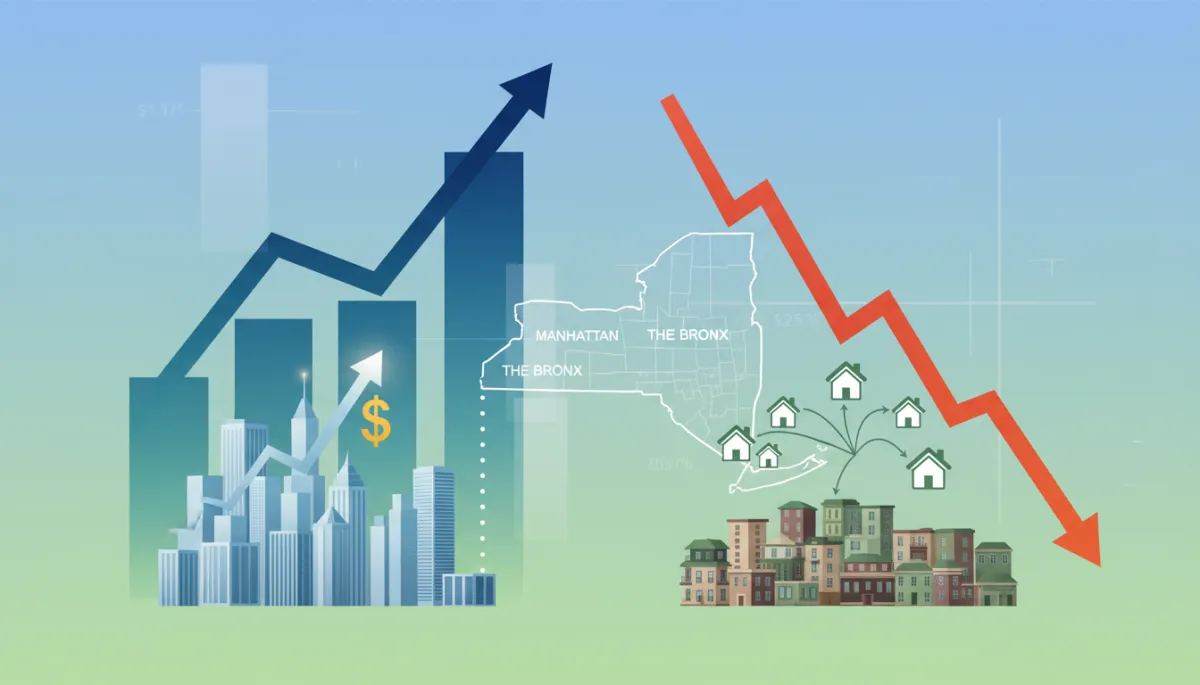
New York real estate just delivered a surprising headline: a record statewide median home sale price of $475,000 in June 2026, even as inventory has climbed for 16 straight months. At the same time, Manhattan set its own Q2 record under very different conditions — a scarcity-driven market where buyers are competing over limited listings. What does this unusual combination of rising prices and growing supply really mean for buyers, sellers, and investors across the five boroughs?

Inside New York’s Record $475,000 Median Home Price
According to the New York State Association of REALTORS®, the statewide median home sale price reached an all-time high of $475,000 in June 2026, up 8% from $440,000 a year earlier (Times Union, July 22, 2026). That figure reflects closed sales, not just ambitious asking prices, which makes the new record especially meaningful for tracking real housing trends.
To understand that number, it helps to place it in context:
The median listing price statewide in June was about $689,000, showing that sellers are still pricing ahead of where deals ultimately close (FRED data).
In the broader Metro New York area, which includes New York City and nearby counties, the median sale price hit roughly $725,000, underscoring how the city and its suburbs continue to pull the statewide average higher.
Statewide, the annual median for 2025 (excluding NYC) was just over $352,000, highlighting how much more expensive metro and coastal markets are compared with much of upstate.
In other words, New York real estate is not one monolithic market. The record $475,000 median is the blended result of very different realities: high-priced city and suburban sales, more affordable upstate homes, and a mix of single-family properties, condos, and co-ops. Still, the headline is clear — prices are at their highest level on record.
How Can Prices Hit Records While Inventory Climbs?
At first glance, the next data point seems contradictory: statewide inventory has now risen for 16 consecutive months. In May 2026, New York recorded 30,489 listings, up 3.2% year-over-year and continuing a steady climb that began in early 2025 (Globe Newswire). Typically, more homes on the market should cool price growth — but that has not yet happened in a meaningful way.
Several forces are working together to explain this unusual pairing of inventory growth and record home prices:
Pent-up sellers are finally listing. After years of owners sitting tight through pandemic uncertainty and rate shocks, more households are deciding that it is time to move, trade up, or cash out.
Demand is still strong, especially in metro areas. Elevated rents, limited new construction, and demographic trends keep buyers in the market, even as mortgage rates remain higher than in the 2010s.
Inventory is growing from a low base. Even with 16 months of increases, supply in many parts of the state remains below pre-pandemic norms, so buyers still feel competition for well-priced homes.
The result is a more nuanced phase of New York housing trends: not the frenzied bidding wars of 2021, but far from a buyer’s market. Instead, we are seeing a gradual move toward balance — with very different experiences depending on location and price point.
Manhattan’s Scarcity-Driven Q2 Record: A Different Story
Nowhere is the contrast sharper than in the Manhattan market. While statewide inventory edges higher, Manhattan’s Q2 2026 numbers tell a classic scarcity story. Median sales prices for co-ops and condos climbed into the $1.25–$1.30 million range, up roughly 4–7% year-over-year, reaching one of the highest levels on record. Yet active listings fell to just over 7,100 units, the lowest second-quarter inventory in about eight years (Corcoran, The Boland Team).
New development launches were down nearly 37%, and overall inventory — especially in prime West Side and luxury segments — tightened sharply. At the same time, contracts above $3 million surged, powered by cash-rich buyers who are less sensitive to mortgage rates. In Manhattan, the story is not about broad-based inventory growth; it is about too much money chasing too few high-quality listings.

Manhattan’s record prices are fueled by tight inventory and luxury demand.
What This Means for Buyers, Sellers, and Investors in the Five Boroughs
Buyers: More Choice, But Not Fire-Sale Prices
For buyers across the five boroughs, the combination of record home prices and inventory growth creates a mixed picture. On one hand, more listings mean more options, particularly in Brooklyn, Queens, and Staten Island, where new supply and resales are slowly rebuilding choice. On the other, the statewide median confirms that affordability remains a real challenge.
In Manhattan, expect competitive bidding on well-priced condos and co-ops, especially under $2 million. Preparation and speed still matter.
In Brooklyn and Queens, inventory growth offers more room to negotiate on homes that have lingered on the market, particularly farther from express transit lines.
In Staten Island and the Bronx, buyers may find a better balance of price and space, as these boroughs track closer to the statewide median than to Manhattan’s luxury-driven levels.
Sellers: Pricing Power With a Shorter Shelf Life
For sellers, the message is encouraging — but with a warning. The record $475,000 median shows that pricing power is still real, especially for move-in-ready homes in desirable neighborhoods. However, 16 months of inventory growth means buyers have more alternatives than they did a year or two ago. Overpricing is increasingly punished with longer days on market and steeper discounts later.
💡 Pro Tip: In today’s New York real estate market, sellers who price within a tight range of recent comparable sales see stronger interest than those who “test the market” at aspirational levels.
Investors: Reading the Split Between Statewide and Manhattan
Investors need to pay close attention to the diverging dynamics between the broader state and the Manhattan market. Statewide, gradual inventory growth and still-rising prices suggest a shift toward more sustainable, income-focused strategies — think stable rental demand in transit-accessible parts of Brooklyn, Queens, and the Bronx, or value-add plays in emerging neighborhoods.
In Manhattan, by contrast, the story is still largely about scarcity and capital preservation. With limited new development and robust luxury demand, high-end condos and co-ops remain more of a long-term wealth store than a quick cash-flow play. Understanding these buyer–seller dynamics — and how housing trends differ borough by borough — is essential for anyone looking to place capital wisely in New York real estate over the next few years.
The Bottom Line
Record prices and rising inventory are not a contradiction — they are a snapshot of a New York housing market in transition. Statewide, supply is rebuilding from historic lows, but not fast enough to push prices down. In Manhattan, scarcity still rules. For buyers, sellers, and investors across the five boroughs, success now depends less on timing the market and more on understanding its deepening local nuances.