NYC Homebuying: Fed Split High Rates Impact 2026
Real Estate, NYC Homebuying, Interest Rates
What a Divided Fed and 1-Year High Mortgage Rates Mean for NYC Buyers in Summer 2026
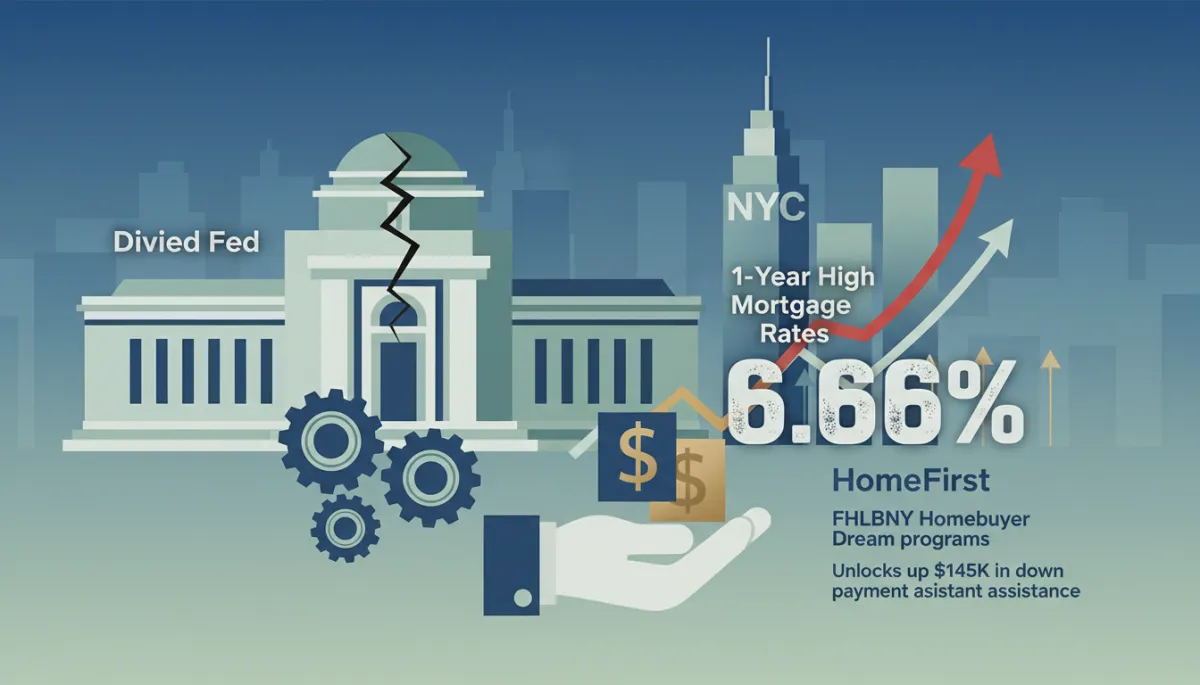
With the Federal Reserve split on its latest decision and 30-year mortgage rates back near 7%, New Yorkers shopping for homes this summer are facing the toughest math in years. But for buyers who know how to layer NYC’s HomeFirst program with the FHLBNY Homebuyer Dream grant, there is still a path to ownership—even in a 6.66% world.
A Divided Fed, a Hawkish Signal
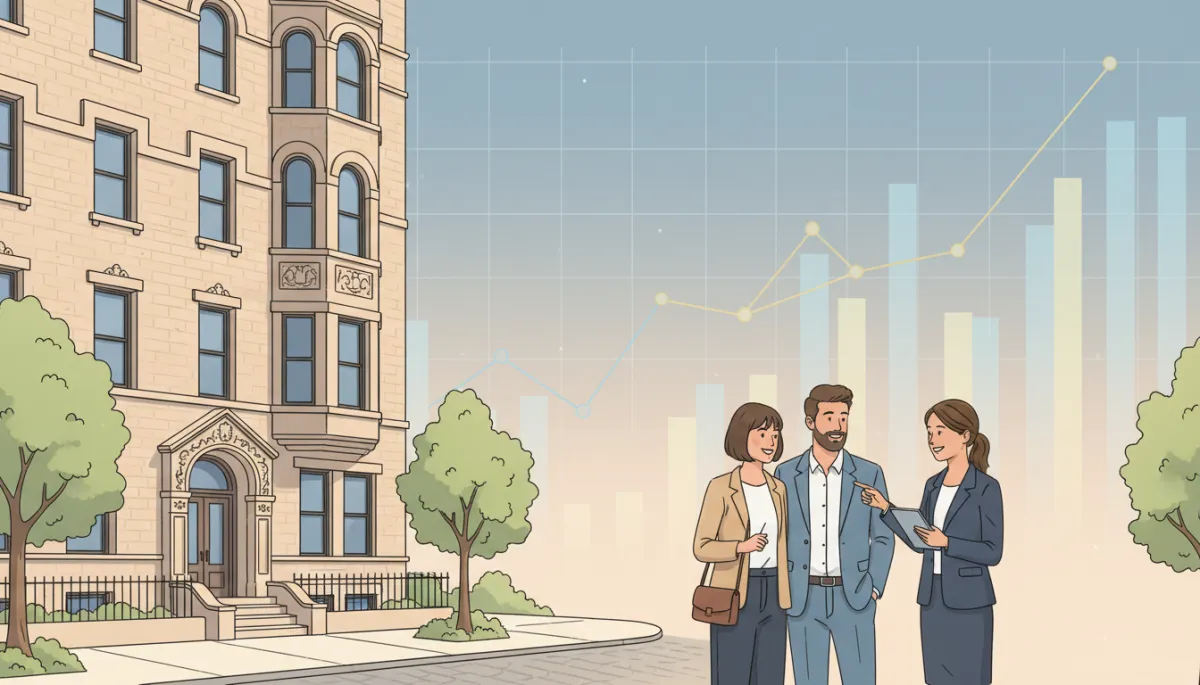
On July 29, 2026, the Federal Open Market Committee voted to keep the federal funds rate unchanged at 3.50%–3.75%. The headline sounded calm—a hold, as markets widely expected. But the details matter: the decision passed on a narrow 9–3 vote, with three members dissenting in favor of a quarter-point hike, according to reporting from Le Monde and other outlets.
Those dissents send a clear message: a meaningful faction inside the Fed still believes policy is not tight enough to tame inflation. Fed Chair Kevin Warsh acknowledged the “impressive resilience” of the U.S. economy, but he also flagged persistent inflation risks. For homebuyers, that tension translates into one thing—higher-for-longer borrowing costs, or at least no quick relief.
30-Year Rates at 6.66%: Why It Hurts So Much
The bond market wasted no time reacting. By the end of that week, AP News reported the average 30-year fixed mortgage rate at 6.66%, a one-year high and up from the mid‑6s just weeks earlier. Freddie Mac data cited by Kiplinger puts many lenders in a 6.6%–6.7% range—a tight band that still adds hundreds of dollars a month to typical NYC payments compared with the low‑rate era.
That 6.66% figure is more than just a headline. Because NYC prices are high, even a single percentage point move in rates can change what you can afford by tens of thousands of dollars. The same monthly budget that bought you a $750,000 condo at 4% might only comfortably support something closer to $600,000 at today’s rates.
The Math at Different NYC Price Points
Let’s look at how 6.66% plays out for typical first-time buyer budgets in NYC, assuming a 30-year fixed mortgage and ignoring taxes and common charges for simplicity. These are illustrative numbers, not lender quotes, but they show the scale of the challenge—and the power of down payment help.
$500,000 purchase, 10% down ($50,000): You borrow $450,000. At 6.66%, the principal and interest payment lands around $2,900–$3,000 per month.
$700,000 purchase, 10% down ($70,000): Loan of $630,000 translates to roughly $4,050–$4,150 per month.
$900,000 purchase, 15% down ($135,000): Borrowing $765,000 puts your payment near $4,900–$5,050 per month.
For many households, the barrier is not just the monthly payment—it’s the cash needed upfront. That’s where NYC’s HomeFirst program and the FHLBNY Homebuyer Dream grant can transform the equation, especially when you stack them strategically.
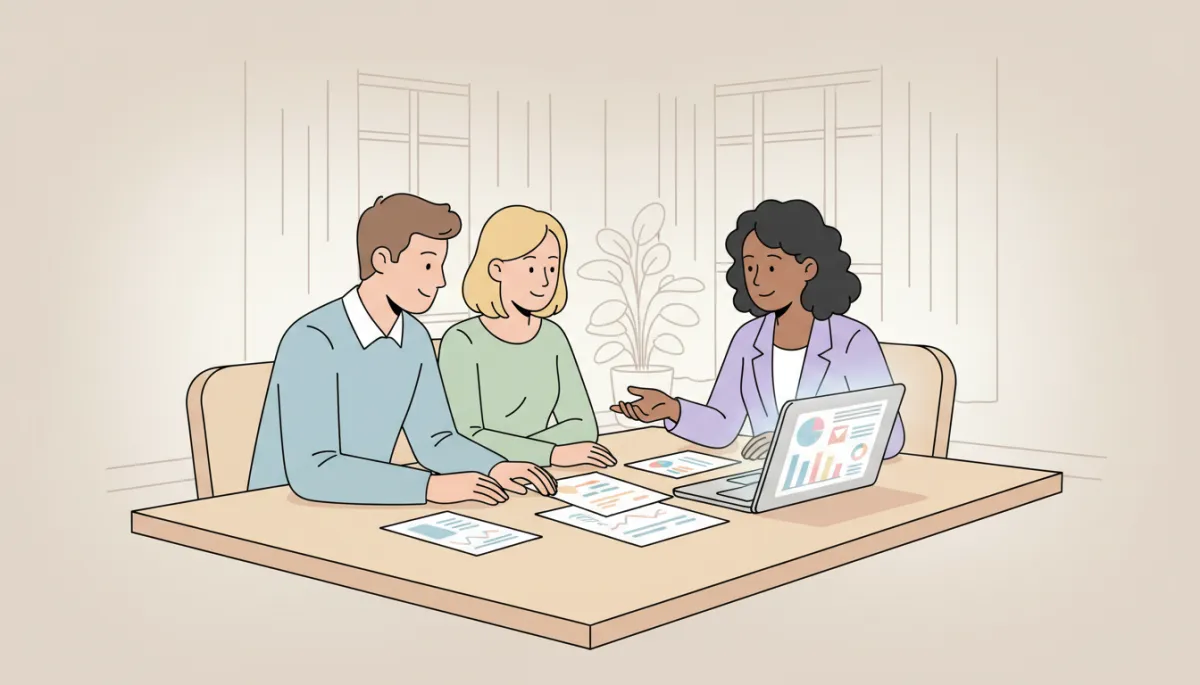
Layered assistance can shrink both your loan amount and your monthly payment.
HomeFirst: Up to $100,000 Toward Your Down Payment
NYC’s HomeFirst Down Payment Assistance Program, run by the Department of Housing Preservation and Development (HPD), offers forgivable loans of up to $100,000—or 20% of the purchase price, whichever is less—for eligible first-time buyers purchasing 1–4 family homes, condos, or co‑ops in the five boroughs.
To qualify, you must be a first-time buyer (no homeownership in the past three years), complete an HPD-approved homebuyer education course, contribute at least 3% of the purchase price from your own funds, and meet income limits up to 120% of Area Median Income (for example, $155,520 for a two-person household in 2026, per HPD documents). You must also live in the home as your primary residence for 10–15 years, depending on assistance amount, for the loan to be fully forgiven.
Practically, HomeFirst can be used for both down payment and closing costs. On a $600,000 condo, a full $100,000 HomeFirst loan could cover more than the entire 20% down payment many lenders prefer, dramatically reducing your mortgage size and monthly payment at 6.66%.
FHLBNY Homebuyer Dream: A Powerful Companion Grant
The Federal Home Loan Bank of New York (FHLBNY) Homebuyer Dream program adds another layer. Through participating member banks, eligible first-time buyers can receive a grant—commonly in the tens of thousands of dollars range—to help with down payment and closing costs. Exact amounts and rules vary by year and lender, but the core idea is the same: non‑repayable funds that sit on top of your own savings and any city assistance.
When structured correctly with a participating lender, Homebuyer Dream funds can be combined with HomeFirst to create a much larger effective down payment than most renters could save on their own in today’s high‑rent environment.
Stacking to $145,000: Making 6.66% Work for You
Here’s where things get interesting. In 2026, a qualified buyer may be able to combine:
Up to $100,000 from HomeFirst, and
Up to $45,000 from FHLBNY’s Homebuyer Dream (exact caps depend on the year’s allocation and lender).
That’s potentially up to $145,000 in total down payment assistance. Let’s revisit our earlier examples and see how that changes the math at 6.66%:
$600,000 condo: With $145,000 in assistance plus, say, $18,000 of your own savings (3% of the price), you could bring more than 25% down to the table. Your loan might drop to around $437,000, bringing your principal and interest payment closer to that of a $500,000 purchase with minimal assistance.
$750,000 co‑op: If you can secure the full $145,000 and contribute 3%–5% of your own funds, your mortgage could fall into the low‑$500,000s. At 6.66%, that might mean a payment in the mid‑$3,000s instead of something pushing past $4,500.
💡 Pro Tip: Not every lender participates in both programs. Start by finding an HPD-approved housing counselor and a bank that offers the Homebuyer Dream grant so your plan to stack assistance is realistic from day one.
How to Approach Summer 2026 as a NYC Buyer
A divided Fed and 6.66% mortgage rates can feel discouraging, but they don’t have to be a stop sign. For buyers under 120% of AMI with stable income and some savings, this market is less about “waiting for rates to fall” and more about engineering the deal through assistance, education, and careful budgeting.
Start by confirming your eligibility for HomeFirst, then talk with a housing counselor about lenders offering the FHLBNY Homebuyer Dream grant. With the right team, it’s possible to turn a daunting rate headline into a manageable monthly payment—and finally trade your rent check for a set of keys.