NYC Real Estate: July 2026 Market Insights

NYC Real Estate, Mortgage Rates, Renting vs. Buying
Record Rents, Rising Rates: What NYC’s July 2026 Numbers Really Mean for Buyers and Sellers
New York City is facing a rare double squeeze in July 2026: mortgage rates have jumped again just as Manhattan and Brooklyn rents hit fresh all‑time highs. If you’re trying to decide whether to buy, sell, or keep renting, the headlines can feel overwhelming. Here’s what this week’s numbers actually mean for real people in the market right now.

Why Mortgage Rates Just Jumped Again This Week
As of mid‑July 2026, 30‑year fixed mortgage rates in NYC are hovering in the mid‑6% range, with most local offers between 6.2% and 6.6% APR, and the very best borrowers sometimes seeing rates as low as 5.75% from select lenders. That’s roughly in line with the national average of 6.49% reported by Freddie Mac, but the story this week is the direction: up.
The latest bump in rates is tied less to local housing data and more to global headlines. A renewed conflict involving Iran has rattled energy markets, pushing oil prices higher. When oil spikes, investors worry about renewed inflation pressure—higher fuel and shipping costs tend to ripple through the entire economy. To compensate, bond markets demand higher yields, and since mortgage rates are closely linked to long‑term Treasury yields, home loan rates move up too.
For NYC buyers, that means the difference of even 0.25–0.50 percentage points is not just a rounding error. On a $700,000 purchase with 10% down, a jump from 6.2% to 6.7% can easily add $200–$250 per month to your payment, and tens of thousands of dollars over the life of the loan. The key takeaway: rates are still historically moderate, but the “cheap money” era is firmly over, and global shocks can change your monthly payment in real time.
💡 Pro Tip: If you’re shopping now, ask lenders to lock your rate with a float‑down option, so you’re protected if markets swing again before closing.
Manhattan and Brooklyn Rents Hit New All‑Time Highs
At the same time, renters are facing record‑breaking numbers. According to Corcoran’s June 2026 report, the median Manhattan rent just hit $5,295, an all‑time high and about 8% higher than a year ago. Brooklyn isn’t far behind: its median rent reached a record $4,350, also up 8% year‑over‑year. The NYC Comptroller’s office estimates that citywide market rents are now roughly 35% above pre‑pandemic levels.
In practical terms, a typical Manhattan household paying $5,295 a month is spending more than $63,000 per year on rent—with no equity to show for it. Even in Brooklyn, $4,350 a month works out to over $52,000 annually. For many renters, those numbers now look uncomfortably close to what a mortgage payment might be on a modest condo or co‑op, especially when you factor in tax benefits and long‑term appreciation.
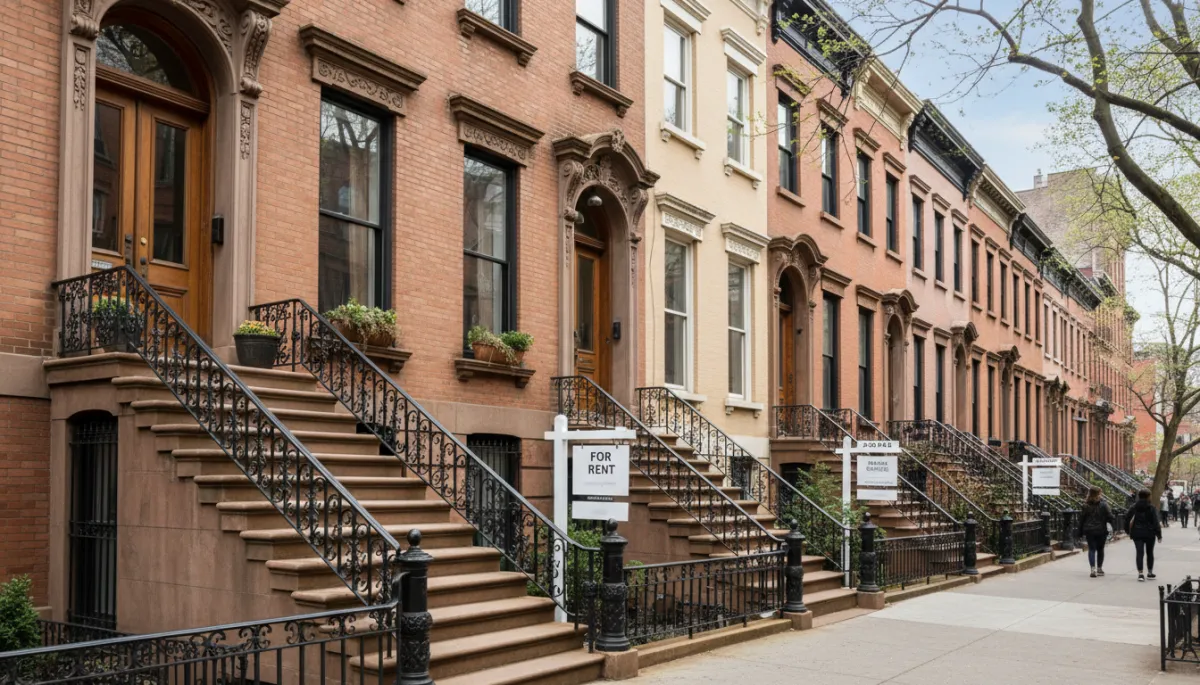
Record rents in core neighborhoods are pushing more long‑time renters to run the numbers on buying.
How HomeFirst Changes the Buy‑vs‑Rent Math for First‑Time Buyers
Enter HomeFirst, New York City’s down payment assistance program. For qualified first‑time buyers, HomeFirst offers up to $100,000 as a 0% interest, forgivable loan that can be used toward your down payment and closing costs on a 1–4 family home, condo, or co‑op in any of the five boroughs. If you live in the home as your primary residence for the required period (typically 10–15 years, depending on the amount), the loan is forgiven.
To qualify, you must be a first‑time buyer (no home ownership in the past three years), complete a homebuyer education course through an HPD‑approved agency, contribute at least 3% of the purchase price from your own funds, and have income under 120% of Area Median Income (for example, up to about $203,520 for a four‑person household). There are also purchase price caps—roughly in the $660K–$730K range for a one‑unit home, depending on borough.
A Simple Example: Renting vs. Buying with HomeFirst
Imagine you’re paying $4,350 a month for a Brooklyn apartment—the current median. Over five years, that’s more than $260,000 in rent, with no ownership stake.
Now compare that to buying a $700,000 condo that falls within HomeFirst’s limits. Suppose you bring 3% down from your own savings (~$21,000), and HomeFirst contributes, say, $70,000 toward your down payment and closing costs. Your actual mortgage might then be closer to $600,000 instead of $679,000. At a rate in the mid‑6% range, your monthly principal and interest payment could end up in the same ballpark as your current rent—sometimes even lower once you factor in tax deductions and the fact that part of each payment goes toward building equity.
In other words, HomeFirst can effectively “replace” years of saving for a traditional 20% down payment. That’s a game‑changer in a city where sky‑high rents make it hard to build savings in the first place. For many households who qualify, the question shifts from “Can I ever afford to buy?” to “Can I find a suitable property within the program’s limits—and navigate the paperwork?”
⚠️ Reality Check: Applicants report that HomeFirst can involve long processing times—sometimes several months. If you plan to use it, build extra time into your closing and work with a seller who understands the program.
What This All Means for You: Buyers, Sellers, and Renters
If You’re a First‑Time Buyer
Rising mortgage rates do make monthly payments heavier, but record rents are effectively a “stealth tax” on staying put. If you qualify for HomeFirst and can find a home within the program’s price limits, this may be one of the few windows where buying can be comparable to renting on a monthly basis—while giving you long‑term stability and potential appreciation. Your next steps: connect with an HPD‑approved counselor, get pre‑approved with a lender familiar with HomeFirst, and be realistic about neighborhoods and property types that fit the program.
If You’re a Seller
High rents support demand from would‑be buyers who are tired of renewing expensive leases. At the same time, higher rates limit how much they can borrow. Expect serious buyers to be payment‑sensitive: they’ll scrutinize common charges, taxes, and any repairs that could hit their monthly budget. Being open to HomeFirst buyers—and allowing flexibility for their approval timeline—could widen your pool of offers, especially in the starter‑home and entry‑level condo segment.
If You’re Staying a Renter (for Now)
Not everyone can or should jump into buying this year. If your income is uncertain, you’re planning a move within a few years, or you don’t meet HomeFirst’s requirements, renting can still be the safer call. But in a world where Manhattan’s median rent is over $5,000, it’s worth at least running the numbers with a trusted agent, lender, or housing counselor. Even if you decide to renew your lease, you’ll do it knowing exactly what you’re trading off.
The bottom line for July 2026: NYC’s housing market is challenging, but not hopeless. Rising rates and record rents are squeezing everyone—but programs like HomeFirst, combined with careful shopping and realistic expectations, can turn today’s painful monthly payment into a long‑term investment instead of a never‑ending expense.