
Smart Moves for Homebuyers Amid Steady Mortgage Rates
Mortgage Rates, Homebuyers Tips, Real Estate Market, Rate Forecast, FOMC Meeting
Rates Aren’t Moving Much This Month — Here’s What Buyers Should Actually Do While They Wait
Mortgage rates are stuck in a narrow range, but that doesn’t mean you should sit on your hands. Here’s how smart homebuyers can use this “quiet” market to get ahead.
Where Mortgage Rates Stand Right Now
As of early July 2026, the Real Estate Market is dealing with mortgage rates that are stable, but not exactly cheap. The average 30-year fixed mortgage is hovering in a tight band around 6.4–6.6%, with Freddie Mac’s latest weekly survey placing it at 6.49%. That lines up with daily data from outlets like MortgageDaily, Fortune, and NerdWallet, which cluster in the mid–6% range.
For buyers considering a shorter payoff period, the 15-year fixed rate is averaging roughly 5.71–5.85%, with many lenders quoting around 5.78–5.84%. These lower rates can mean big long‑term interest savings, though the monthly payment will be higher because you’re paying the loan off in half the time.
Why Rates Drifted After the June Fed Meeting
If it feels like rates edged up a bit after the June Federal Reserve meeting, you’re not imagining it. Markets interpreted the Fed’s tone as hawkish — in plain English, policymakers signaled they’re still more worried about inflation staying too high than about growth slowing too much. That tone pushed Treasury yields higher, and mortgage rates tend to follow those yields, leading to a modest rate drift upward rather than the cuts many buyers were hoping for this year.
Looking further out, the Fed’s own projections and market pricing suggest a greater likelihood of rate hikes rather than cuts later in 2026 if inflation proves sticky. That doesn’t guarantee significantly higher Mortgage Rates, but it does mean buyers shouldn’t count on a sudden drop back to the 3–4% world we saw earlier in the decade.
Key Dates: CPI on July 15 and the FOMC Meeting on July 28–29
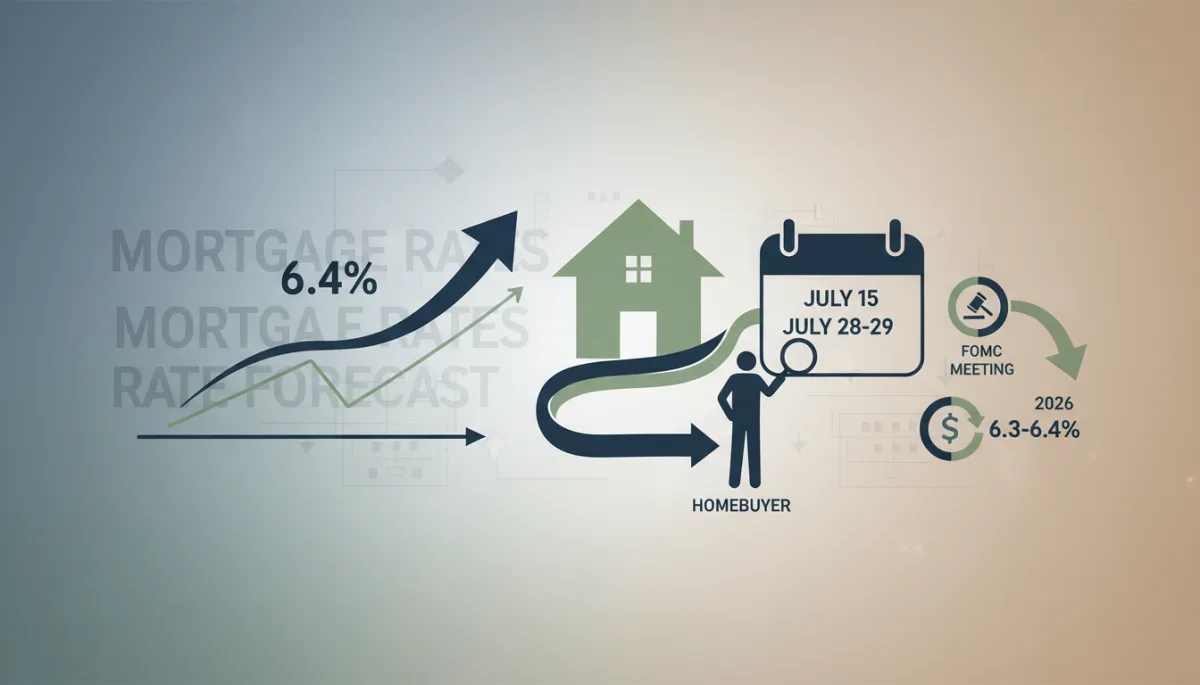
Two upcoming events could shake this period of calm — or reinforce it. The first is the CPI release on July 15, which provides the latest snapshot of inflation. If CPI comes in hotter than expected, markets may quickly price in a more aggressive Fed, nudging mortgage rates higher. A cooler reading, on the other hand, could give rates a little breathing room, even if not a dramatic drop.
Next, all eyes will turn to the FOMC Meeting on July 28–29. While the Fed’s decision is about short‑term interest rates, the Rate Forecast and language in the statement often move longer‑term yields and, in turn, mortgage pricing. Any hint that the Fed is leaning toward keeping policy tight for longer could keep Mortgage Rates anchored near today’s levels or push them a bit higher.
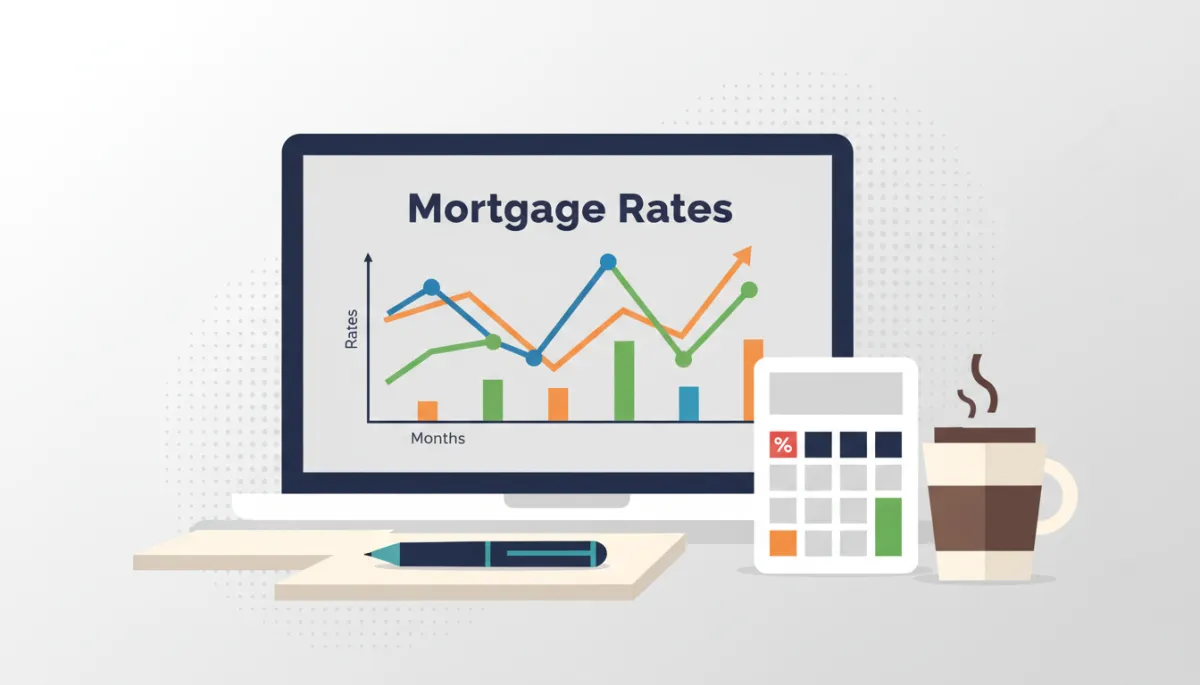
Tracking rate trends helps buyers decide when to lock and how to budget.
What the Forecasts Say About the Rest of 2026
Major housing economists don’t expect a big break in rates this year. Forecasts from organizations like Fannie Mae and the Mortgage Bankers Association (MBA) point to year‑end 2026 mortgage rates around 6.3–6.4% for a 30‑year fixed loan. In other words, they expect us to end the year very close to where we are now — maybe a touch lower, but not dramatically so.
Forecasts can be wrong, of course, but they’re a useful reminder: waiting for “perfect” rates may mean waiting forever. For many buyers, the better question isn’t “Will rates drop?” but “Does buying now make sense for my budget, timeline, and local market?”
Smart Moves for Homebuyers While Rates Are Stable
With Mortgage Rates holding in a relatively tight band, you have a valuable window to prepare strategically instead of reacting emotionally to every headline. Here are practical Homebuyers Tips to focus on right now:
1. Get fully pre‑approved, not just pre‑qualified. A full pre‑approval — including income documentation, credit pull, and underwriting review — makes you a stronger buyer when you find the right home. In a competitive Real Estate Market, sellers take pre‑approved offers more seriously, and you’ll know exactly what payment range works at current rates.
2. Shop multiple lenders on the same day. With rates clustered around 6.4–6.6% for a 30‑year and 5.71–5.85% for a 15‑year, small differences in lender margins and fees matter. Get quotes from at least three lenders on the same day, comparing both the rate and the total closing costs. A 0.125% difference can save thousands over the life of the loan.
3. Decide when to lock your rate. If you’re under contract and planning to close within 30–45 days, a rate lock can protect you from any post‑CPI or post‑FOMC volatility. If your timeline is longer, ask about a float‑down option that lets you benefit if rates dip modestly before closing.
4. Fine‑tune your budget using today’s rates. Instead of guessing, run real payment scenarios at 6.5% for a 30‑year and 5.8% for a 15‑year. Include taxes, insurance, and HOA dues. This helps you set a realistic price range and reduces stress once you start touring homes.
5. Improve your credit and down payment. In a period of flat rates, the fastest way to lower your personal rate is to strengthen your profile. Paying down revolving debt, correcting credit report errors, or nudging your score into the next tier can unlock better pricing. Even an extra 1–2% down can slightly reduce your rate or remove mortgage insurance sooner.
6. Be flexible on home features, firm on payment. Rates may not budge much, but you can adjust your target neighborhood, square footage, or must‑have list to stay within a comfortable monthly payment. Decide your “walk‑away” number first, then work with your agent to find homes that fit under that ceiling.
The Bottom Line: Don’t Wait for a Miracle Rate
With the 30‑year fixed averaging around 6.4–6.6% and the 15‑year near 5.71–5.85%, plus forecasts calling for year‑end 2026 rates in the 6.3–6.4% range, the most realistic scenario is that Mortgage Rates stay roughly where they are — with some bumps around data releases and Fed meetings. Rather than trying to time the market perfectly, use this period of relative stability to get prepared, informed, and financially ready.
If the numbers work for you today and you find a home that fits your life, it may be wiser to move forward — knowing you can always consider refinancing down the road if rates meaningfully improve. In the current Real Estate Market, the best strategy isn’t waiting for the perfect rate; it’s building a solid plan around the rates we actually have.